
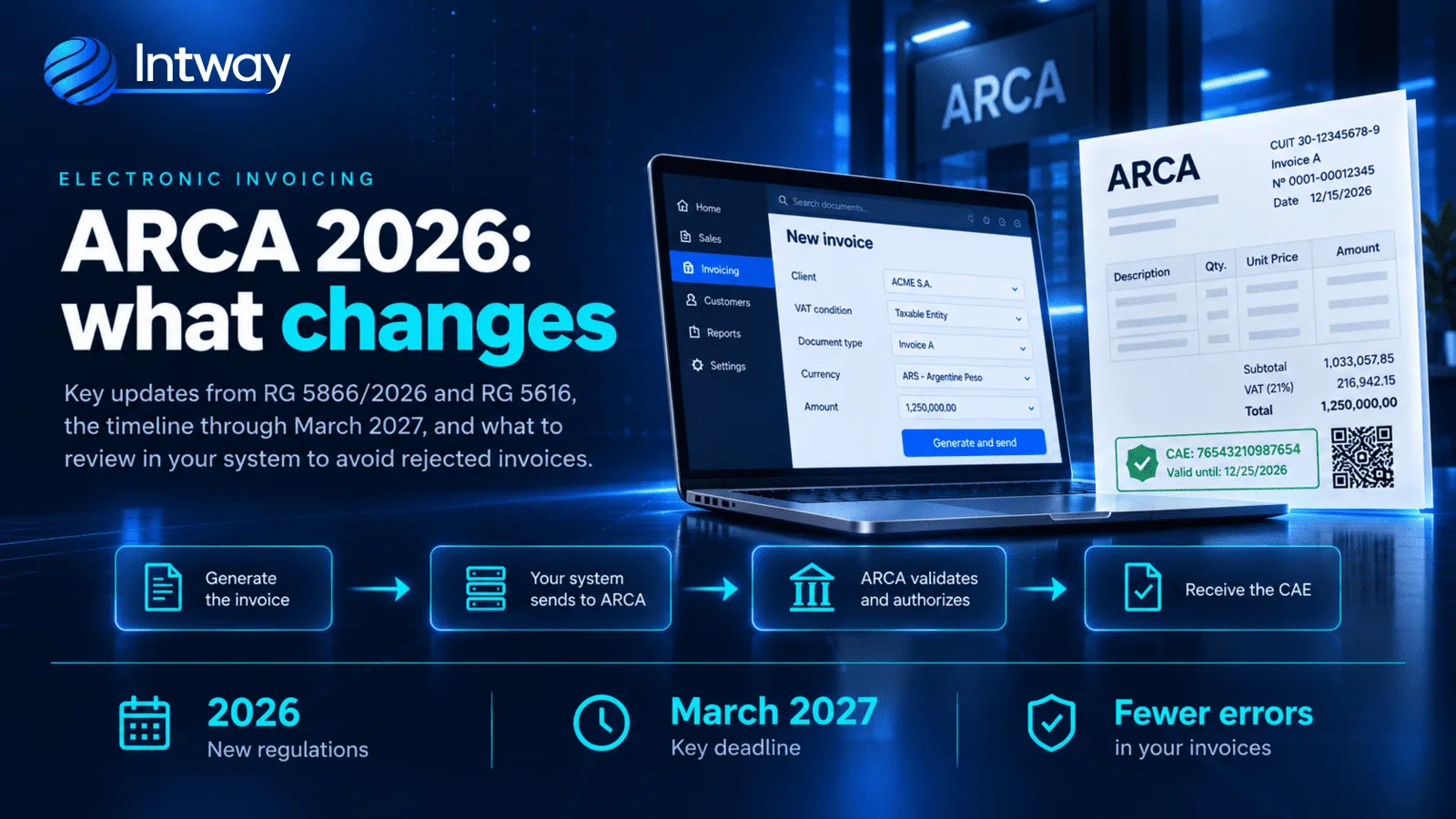
Argentina e-invoicing in 2026: ARCA's new rules, key dates and how to adapt your system
What changes under ARCA's RG 5866/2026 and RG 5616, the timeline to March 2027 and what to check so ARCA keeps authorizing your invoices.
15/09/2026
We design microservices architectures that scale applications, accelerate delivery cycles, and evolve complex systems in a controlled way.
Microservices are an architectural style that decomposes an application into small, well-bounded, independent services. Each service encapsulates a specific business capability —such as catalog, inventory, billing, or payments— and can evolve, deploy, and scale independently, reducing coupling between components.
In a monolithic architecture, a change in one module can increase operational risk and affect the stability of the entire application. In a well-designed microservices architecture, changes are isolated, reducing their impact on the rest of the system and enabling more frequent delivery cycles.
Adopting microservices is usually advisable when:
Not every application requires a microservices architecture. We do not recommend this approach when:
In those cases, a well-designed monolith usually offers a better cost-benefit ratio, and that is what we advise.
Domain analysis. Applying Domain-Driven Design principles, we analyze the business domain, identify bounded contexts, and define the boundaries of each service.
Design. We define the API Gateway, data model, security, and infrastructure based on each project's requirements. We design stable APIs and contracts between services to minimize coupling and enable the independent evolution of each component.
Phased extraction (Strangler Pattern). Services are incorporated progressively while the existing system continues to operate, reducing migration risk and delivering value from the early phases.
Continuous integration and delivery. We automate the full cycle through CI/CD pipelines, automated testing, and progressive deployment strategies that reduce operational risk.
Observability. We implement distributed tracing, metrics, centralized logging, and alerting to reduce diagnosis times and support ongoing operations.
Inter-service communication is designed according to each use case. When the scenario requires it, we use event-driven architectures with brokers such as Kafka, RabbitMQ, or equivalent managed services, which decouple services over time and manage eventual consistency in a controlled way.
Microservices architecture is a software design decision. Kubernetes is one possible runtime platform, but not a requirement for adopting this approach: we also work with ECS, Cloud Run, on-premise, and hybrid environments, according to each organization's needs.
Many organizations run legacy systems that work but limit their ability to evolve. In most cases, it is not necessary to fully replace an existing application: incremental migration allows the current system and the new services to coexist throughout the process.
We also design native microservices-based architectures for new products, avoiding carrying the limitations of legacy systems into new developments.
During a migration, it is common to find design decisions that increase complexity without adding value. Among the most frequent are:
Docker, Kubernetes, OpenShift, AWS ECS, Azure AKS, Google GKE, Kafka, RabbitMQ, Redis, PostgreSQL, SQL Server, MongoDB, Elastic, Prometheus, Grafana, Jaeger, and OpenTelemetry, among others.
For deeper analysis and case studies, visit our Insights section.
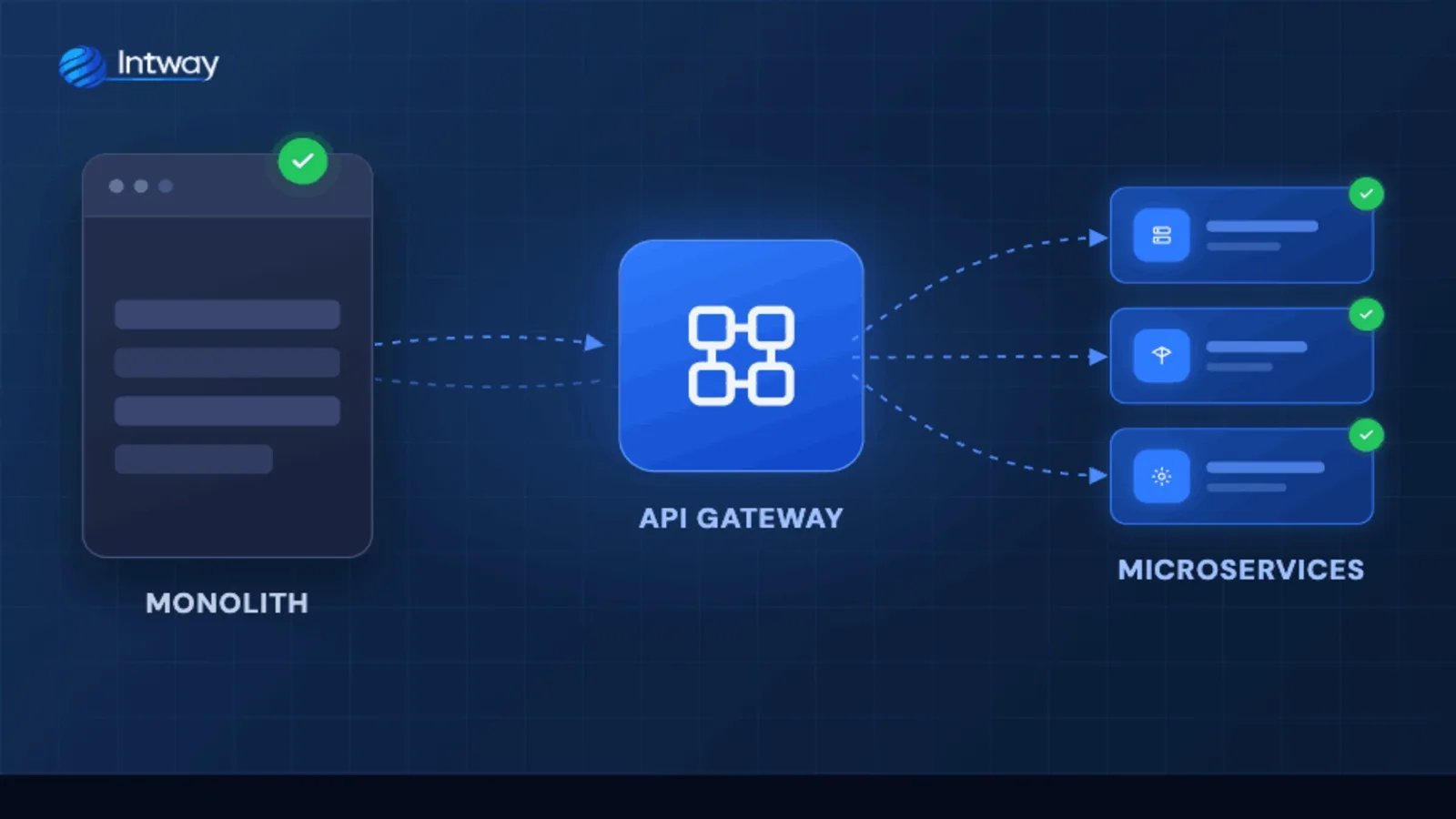
The existing system and the new services coexist
Ver más →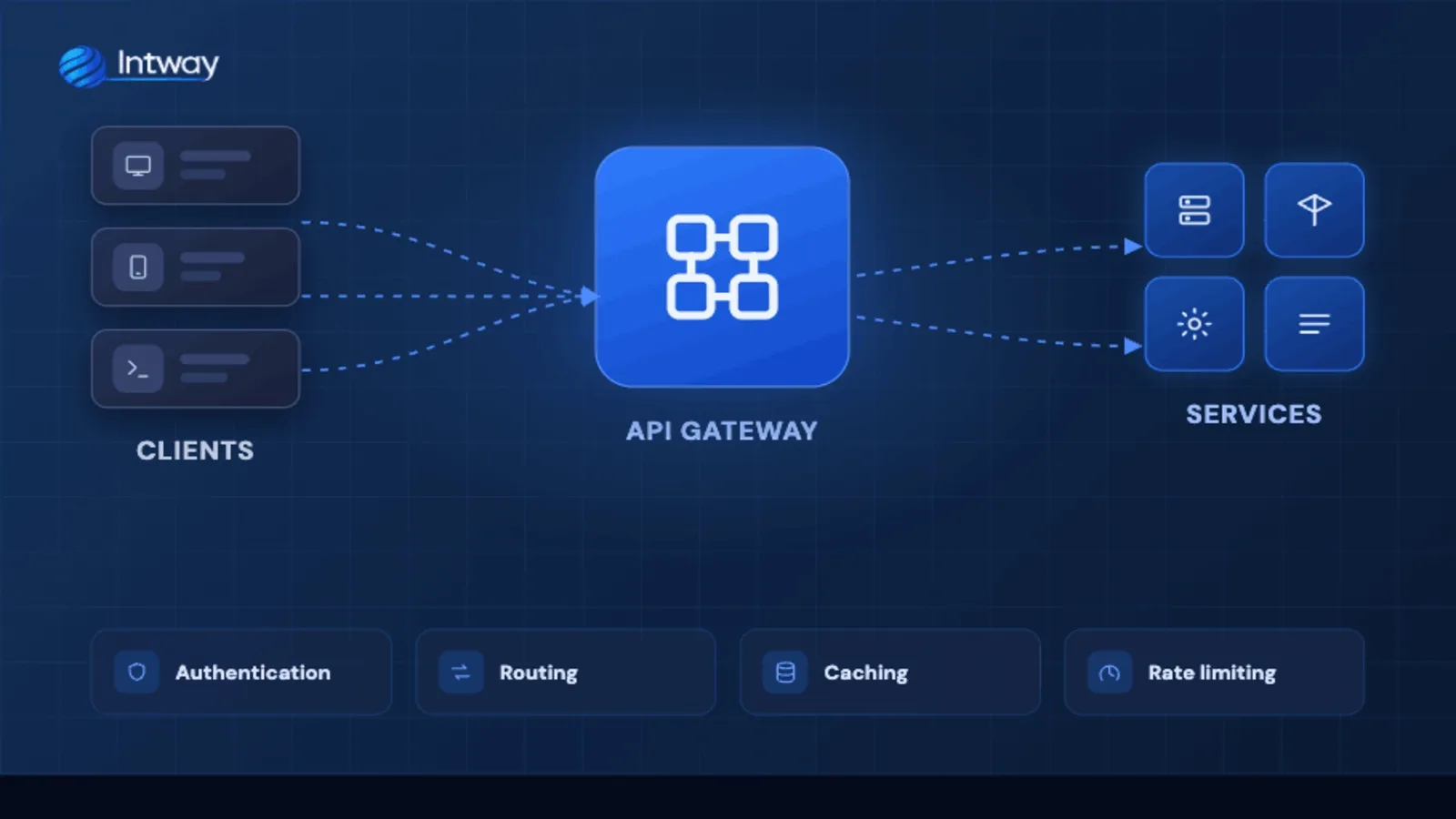
A unified entry point and stable APIs
Ver más →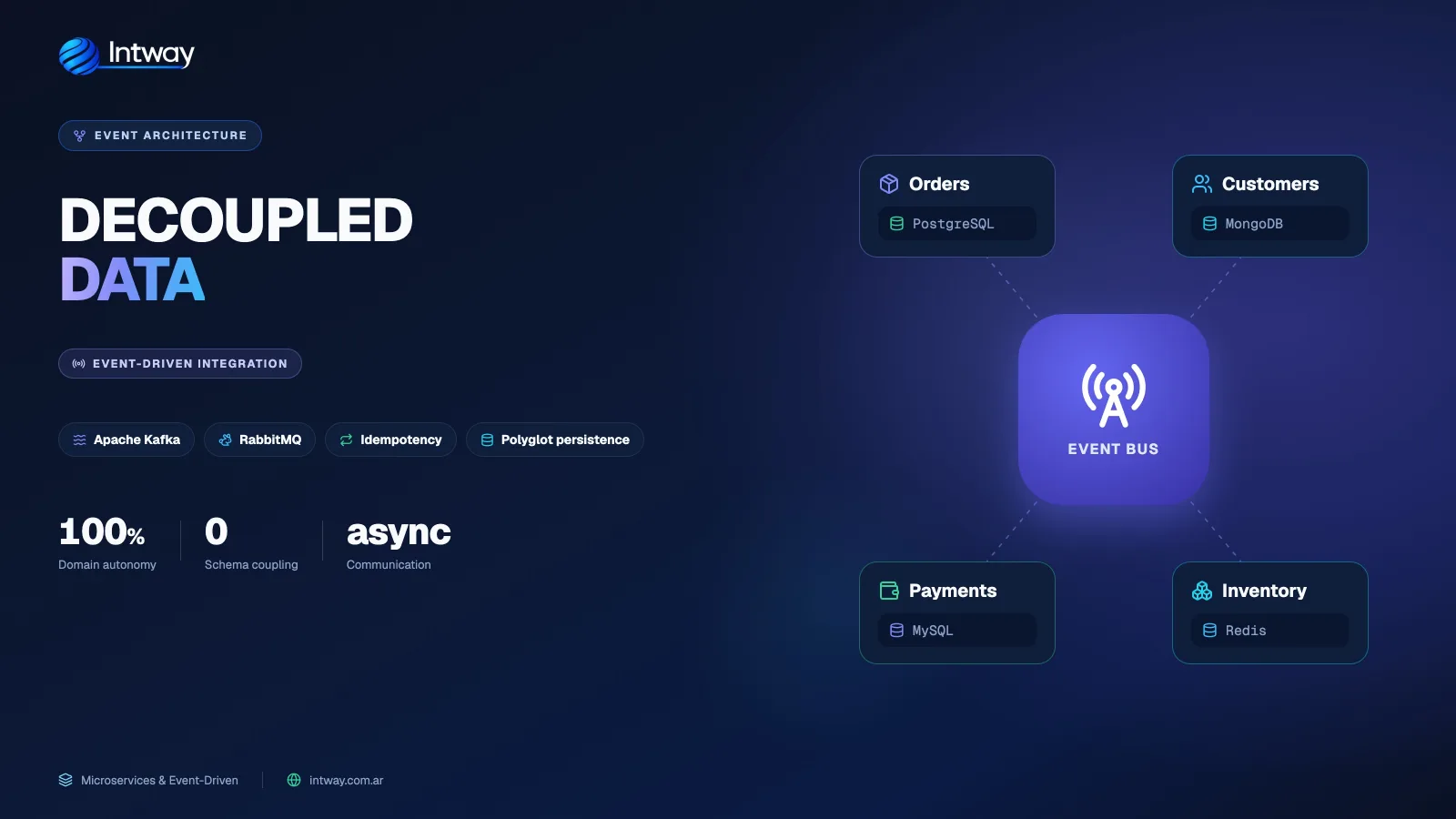
Each service manages its own data model
Ver más →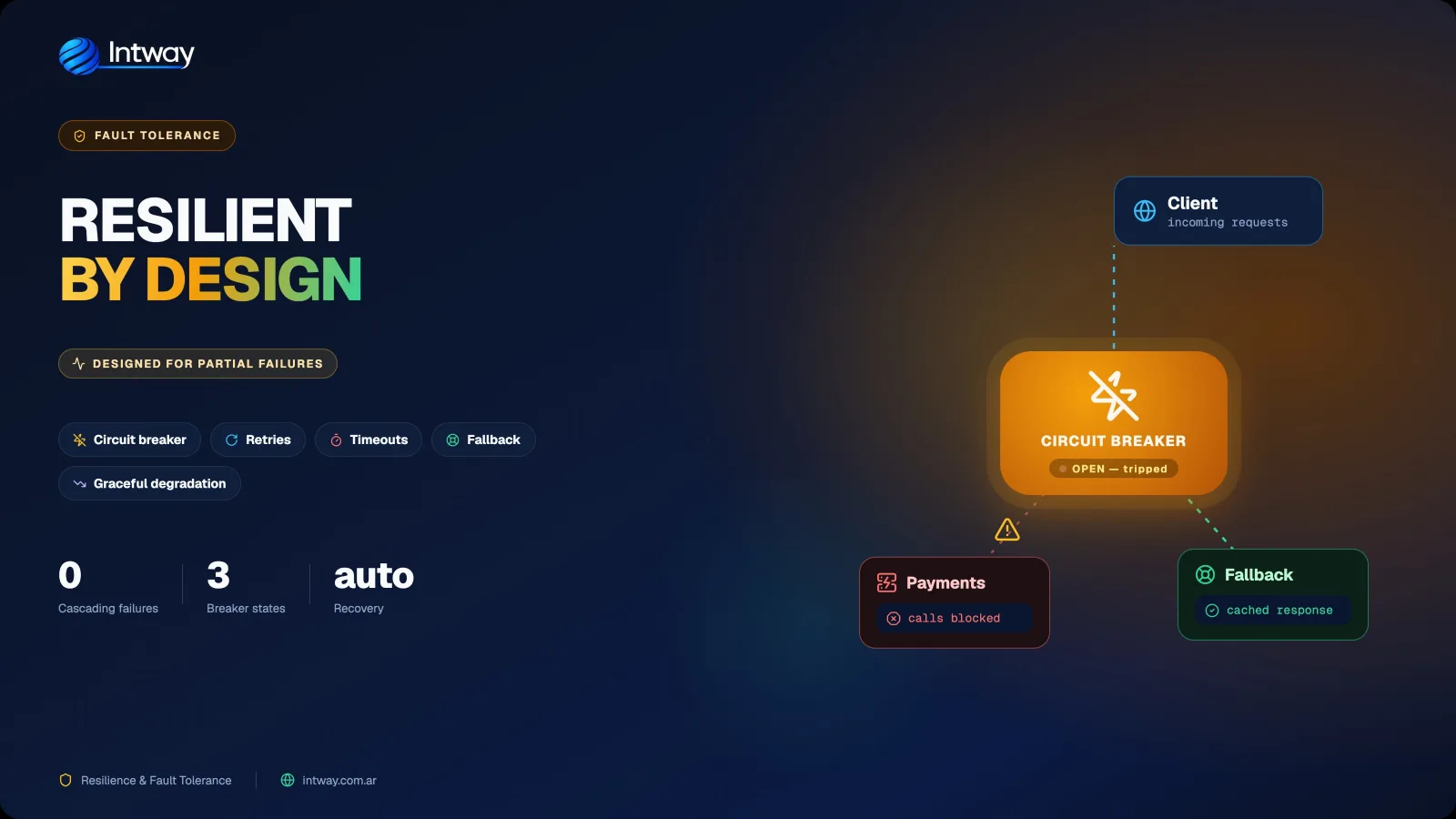
Designed for partial failures
Ver más →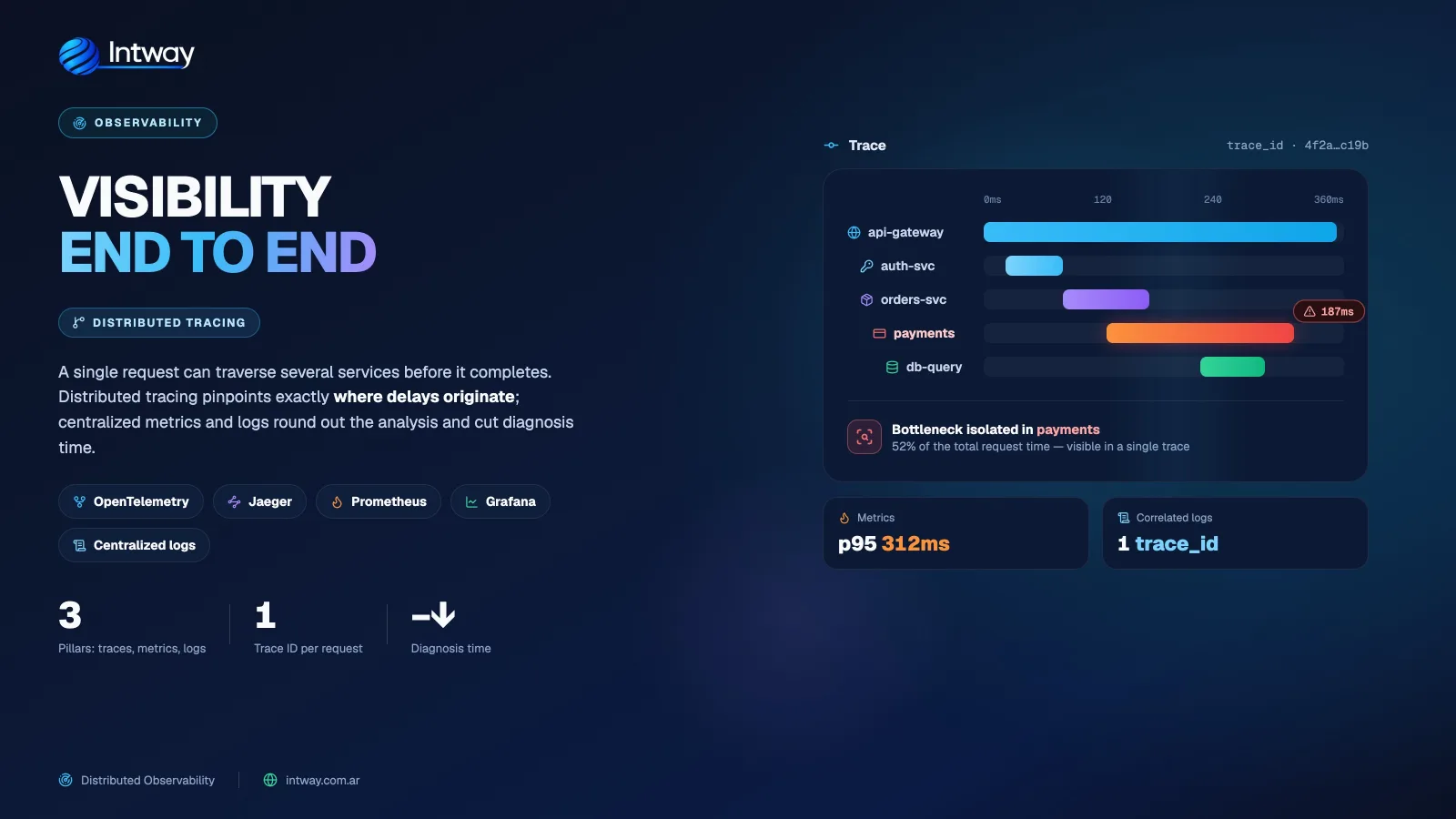
Full visibility into system behavior
Ver más →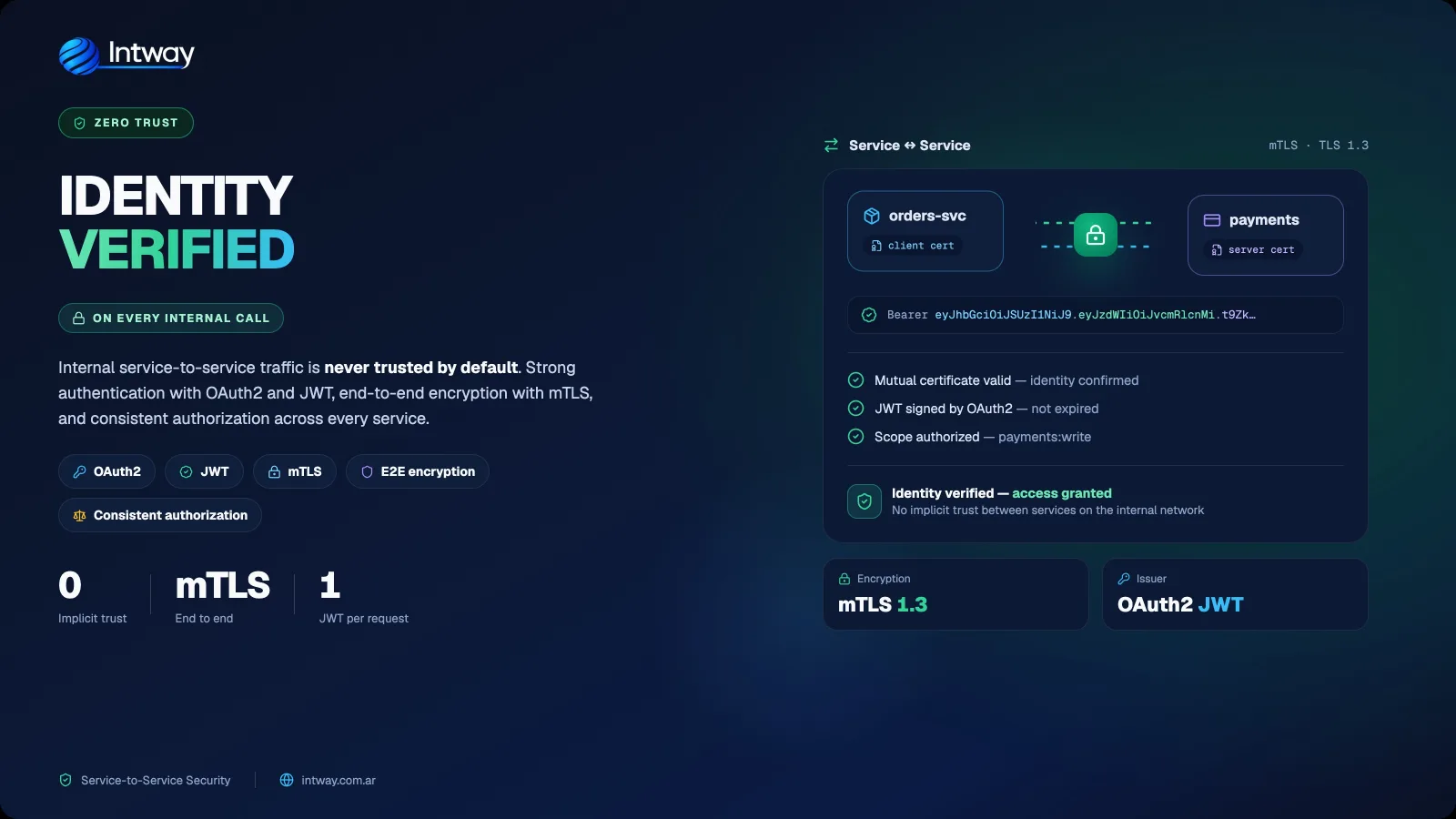
Verified identity on every internal communication
Ver más →From monolithic systems that are hard to evolve to scalable, maintainable architectures.
Each business domain is implemented as an independent service, isolating changes and reducing the impact of incidents.
More frequent, lower-risk deployments, with strategies such as blue-green and rollback capabilities in case of failure.
Each team owns its services and can deploy independently, reducing cross-team blockers.
Applying Domain-Driven Design principles, we analyze the business domain, identify bounded contexts, and define the boundaries of each service.
We define the API Gateway, service contracts, security, data model, and infrastructure (cloud, on-premise, or hybrid).
Services are incorporated progressively while the existing system continues to operate, reducing migration risk.
We automate continuous integration and delivery, and implement distributed tracing, metrics, and alerting to support operations.
When multiple teams work on the same system, different parts of the application have very different scalability requirements, or deployment cycles are slow and high-risk. For small products or teams, a well-designed monolith is usually more efficient.
The bounded size of each service simplifies diagnosis, and deployment strategies with rollback allow changes to be reverted in a controlled way. The observability implemented during the project reduces detection and resolution times.
It is more complex to operate than a small monolith, so its adoption must be justified by scale and team structure. In systems of a certain size, team autonomy and selective scaling usually offset that complexity.
It depends on the scope, but a typical range is 3 to 6 months applying the Strangler Pattern. The existing system continues to operate throughout the process.
No. Microservices architecture is a software design decision; Kubernetes is one possible runtime platform, not a requirement. We work with Kubernetes, ECS, Cloud Run, Azure, on-premise, and hybrid environments, according to the project's requirements.
Not theory: these projects are in production.
We assess your current architecture, identify improvement opportunities, and define an evolution strategy aligned with your business needs.
Schedule a technical consultation