Introduction
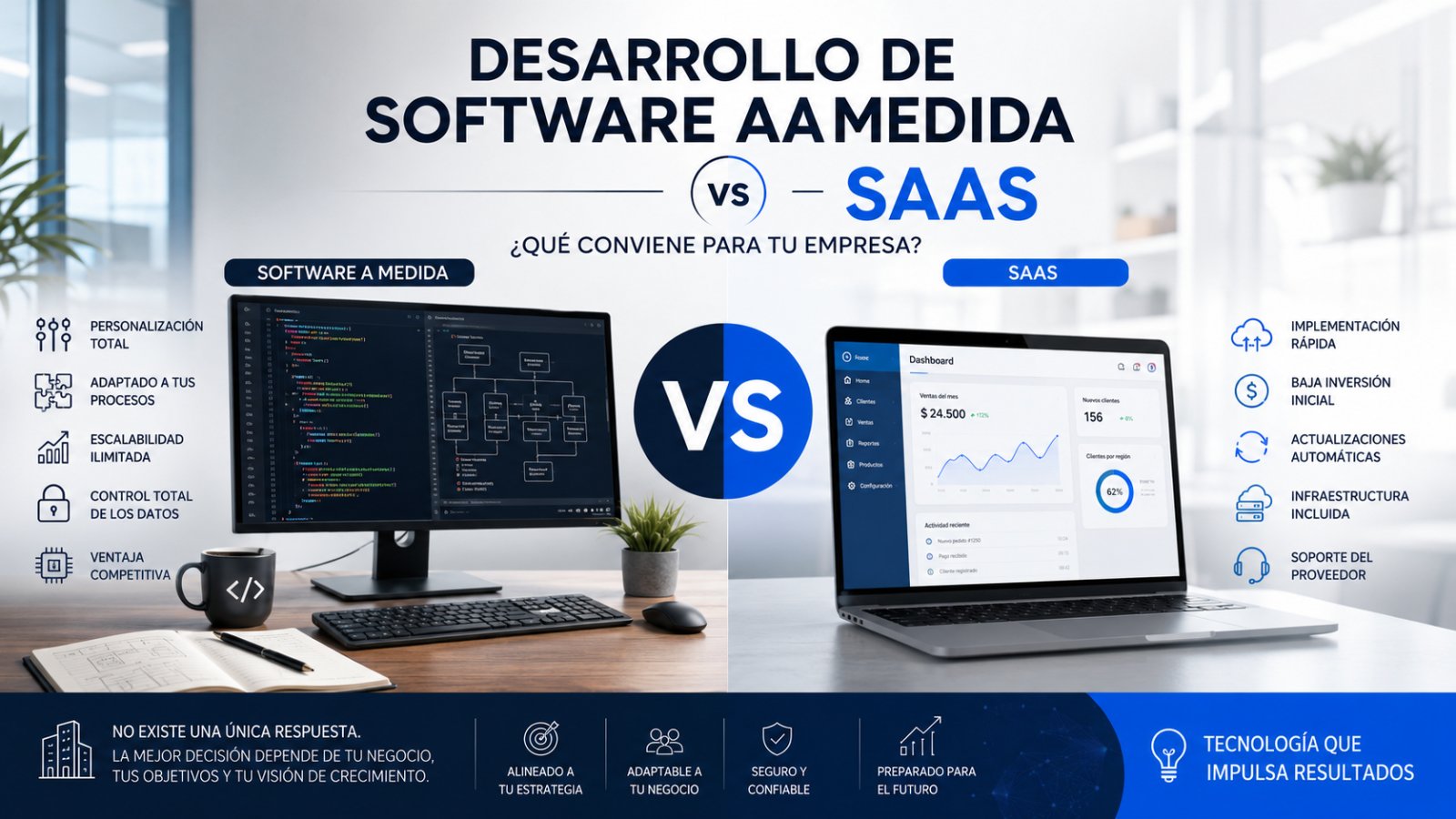
Choosing between a SaaS platform and custom software development is one of the most important technology decisions a company can make. The right choice affects costs, scalability, innovation and long-term competitiveness.
SaaS solutions provide a fast implementation with lower upfront investment, while custom software is designed around your business processes, offering maximum flexibility and long-term strategic value.
What Is SaaS?
Software as a Service is cloud-based software managed by a third-party provider and accessed through a subscription model.
Benefits of SaaS
- Fast deployment.
- Lower initial investment.
- Automatic updates.
- Infrastructure managed by the provider.
Limitations of SaaS
- Limited customization.
- Vendor dependency.
- Growing subscription costs.
- Restricted integrations in some scenarios.
What Is Custom Software Development?
Custom software is designed specifically for your company's processes, objectives and operational requirements, providing complete control over functionality and future evolution.
Benefits of Custom Software
- Full customization.
- Excellent scalability.
- Advanced integrations.
- Ownership of the solution.
- Support for AI and business automation.
SaaS vs Custom Software Comparison
| Aspect | SaaS | Custom Software |
|---|---|---|
| Deployment | Fast | Planned |
| Customization | Limited | Unlimited |
| Scalability | Good | Excellent |
| Ownership | Vendor | Company |
When Should You Choose SaaS?
SaaS is ideal for organizations with standard processes, limited budgets and the need for rapid implementation.
When Should You Choose Custom Software?
Custom software becomes the best option when technology is a competitive advantage, integrations are critical or business processes are unique.
Total Cost of Ownership
While SaaS usually requires less upfront investment, long-term subscription fees may exceed the cost of owning a custom-built solution, especially for growing organizations.
Making the Right Decision
The best decision depends on business strategy, projected growth, integration requirements, operational complexity and expected return on investment.
The best technology decision is the one that supports your business for years, not just the cheapest option today.
Conclusion
SaaS and custom software are complementary approaches rather than competing ones. Many organizations successfully combine both strategies, using SaaS for standardized processes while building custom software for their core business capabilities.