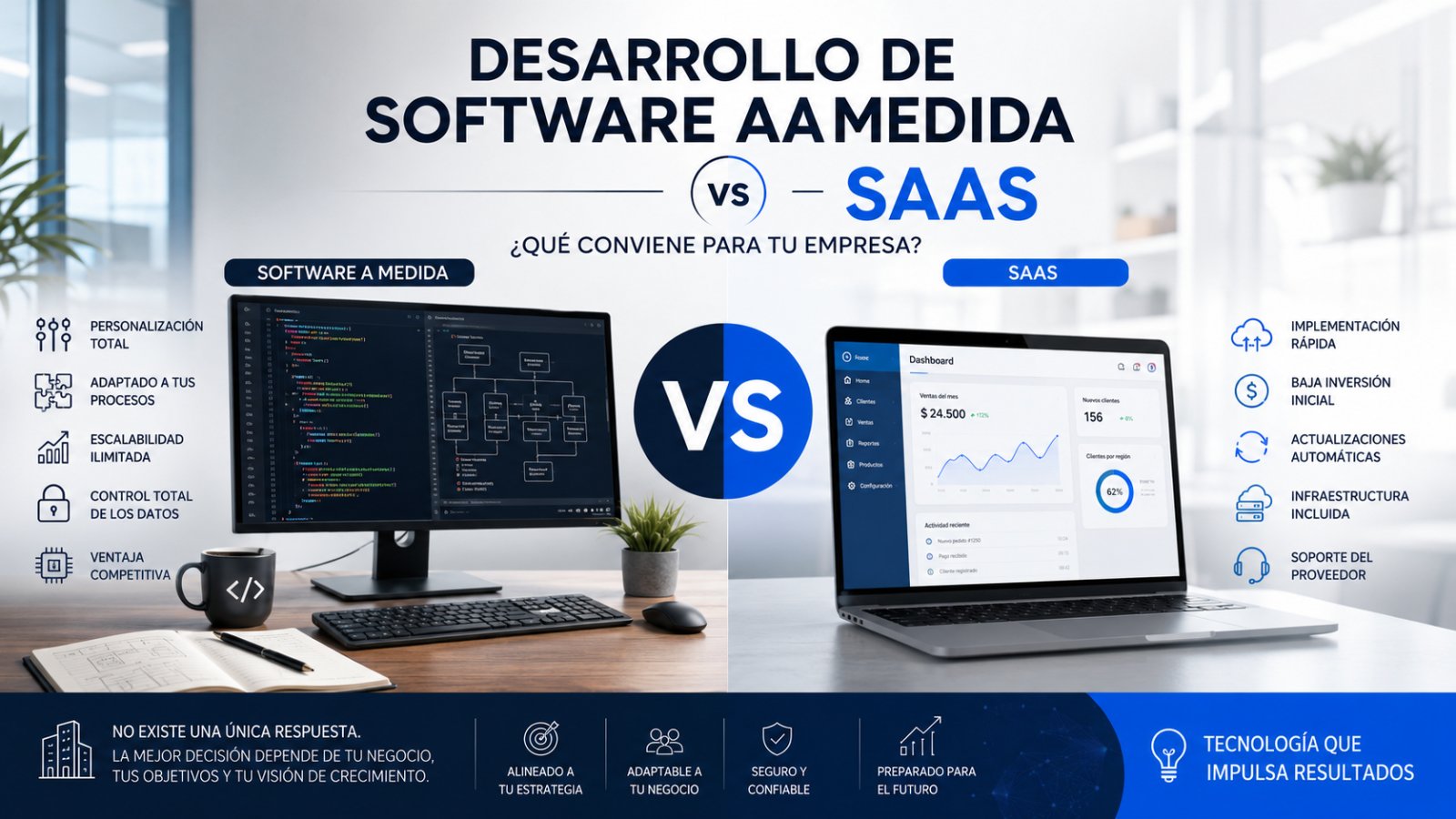
Custom Software Development vs SaaS: Which Is the Best Choice for Your Business?
Learn the differences between SaaS and custom software development to choose the solution that best supports your company's growth.
11/07/2026
Systems built around how your business actually works, not the other way around. Two-week releases, fixed scope per phase, and the code stays yours.
Custom software is a system built around the way you work: your statuses, your pricing rules, your approval flows, your forms, your vocabulary. It is not a generic product where you switch features off until it vaguely resembles your operation. It is the exact opposite.
For a small or medium business this matters more than for a corporation. SMBs compete by doing something different: a special configuration, a shorter lead time, closer service. That edge almost never fits inside an off-the-shelf product, and when the company adapts to the software instead of the reverse, the first thing lost is precisely what made it worth choosing.
It is also not a two-year program or an enterprise budget. A good custom project for an SMB starts small, solves one specific bottleneck, and pays for itself with the hours it frees up.
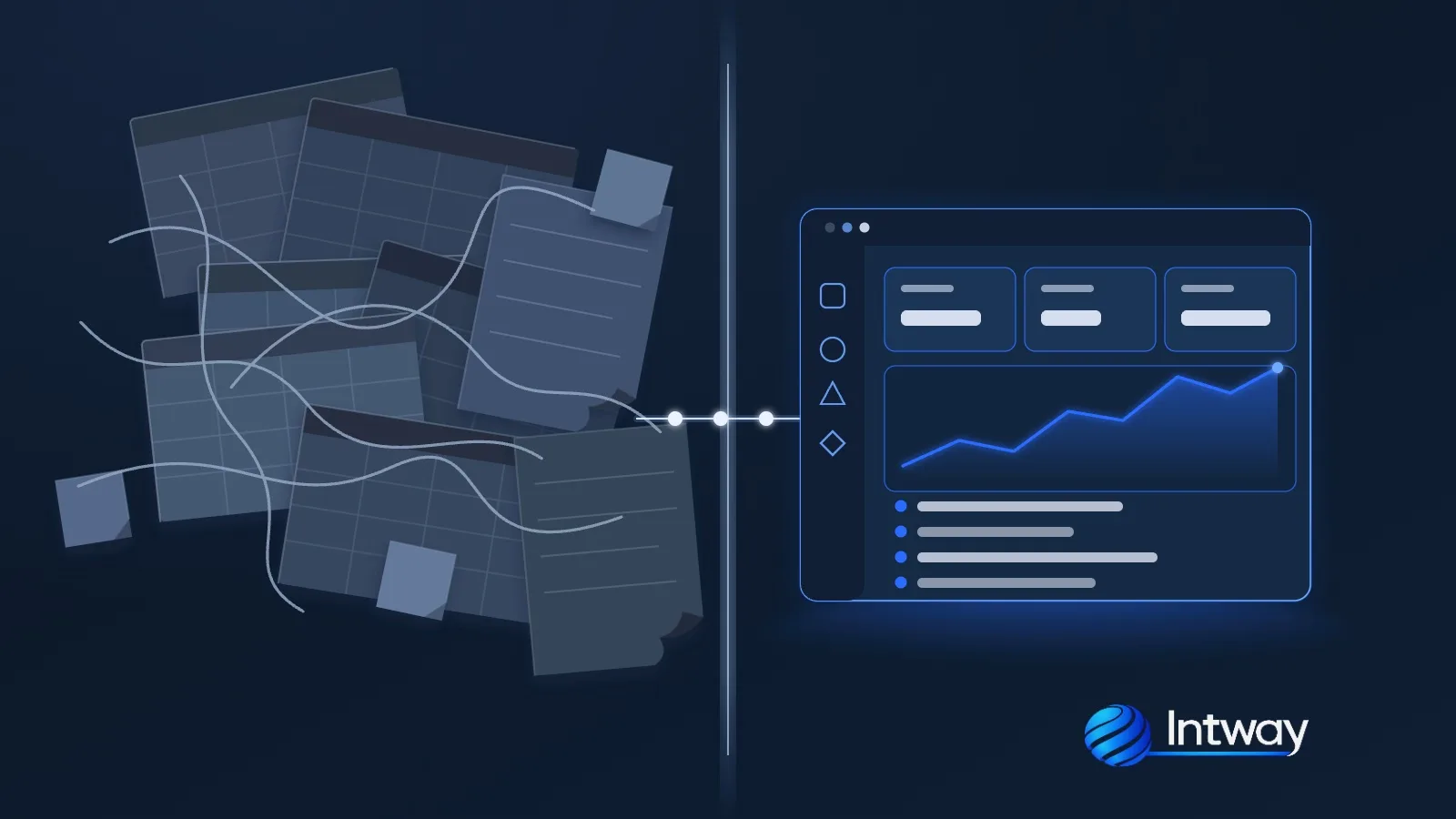
The starting point is almost always the same: the spreadsheet. And spreadsheets are not free. The review of field audits on operational spreadsheets published by Raymond Panko (University of Hawaii) found errors in more than 86% of those audited. When that spreadsheet drives pricing, inventory or collections, every error has a cost.
It does not always make sense, and saying so is part of the job. These are the signals that the moment has arrived:
If the process is standard (accounting, payroll, plain invoicing) an existing product, properly integrated, almost always wins. The healthy answer is usually hybrid: a product for what does not differentiate you, custom development for what does.
Not sure whether you actually need custom software? In a 30-minute call we review your operation and tell you whether to build, integrate what you already have, or buy an existing product. If the answer is buy, we say so. Get in touch and let us look at it together.
The honest comparison is not custom versus ERP: it is which need you are solving. SAP, Odoo or any local accounting suite handle very well what is identical across every company. The problem shows up in whatever is specific to yours.
| Need | SaaS or ERP product | Custom software |
|---|---|---|
| Accounting, payroll, statutory invoicing | Excellent | Unnecessary |
| Processes unique to your business | Limited: ends in parallel spreadsheets | Excellent |
| Integration with other systems | Depends on the vendor API | Total: defined at design time |
| Changes when the business changes | Subject to the vendor roadmap | Your priority, in weeks |
| Time to go live | Fast if the process fits | Phased, the first one in weeks |
| Cost over time | Per-user licences plus customizations | Initial investment plus evolution |
| Ownership of code and data | The vendor | Yours |
In practice almost no SMB sits at either extreme. The most common and healthiest answer is a mix: a standard product for accounting and tax, custom development for the operation that differentiates you, and both connected through APIs. We go deeper in custom software vs SaaS.
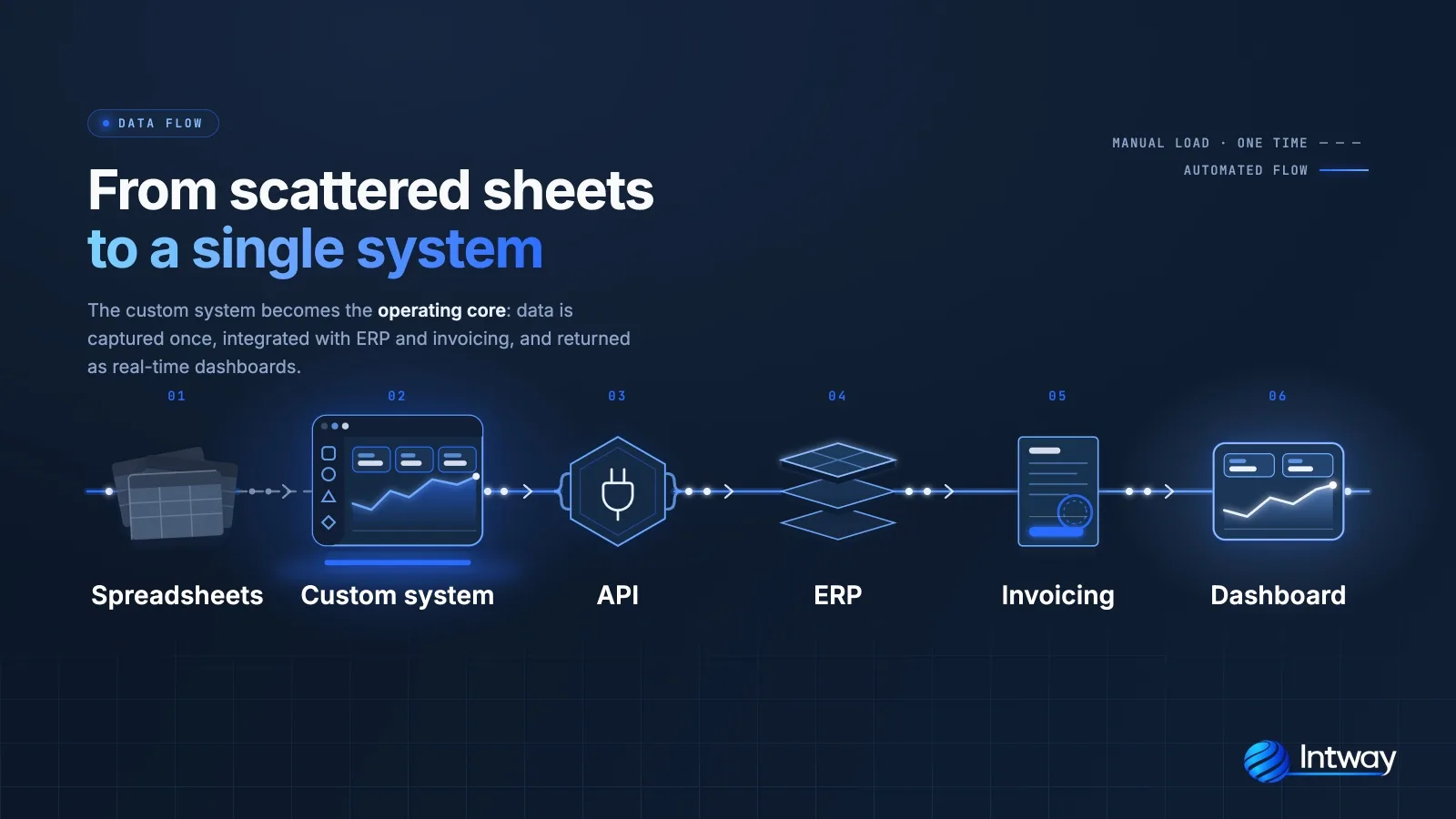
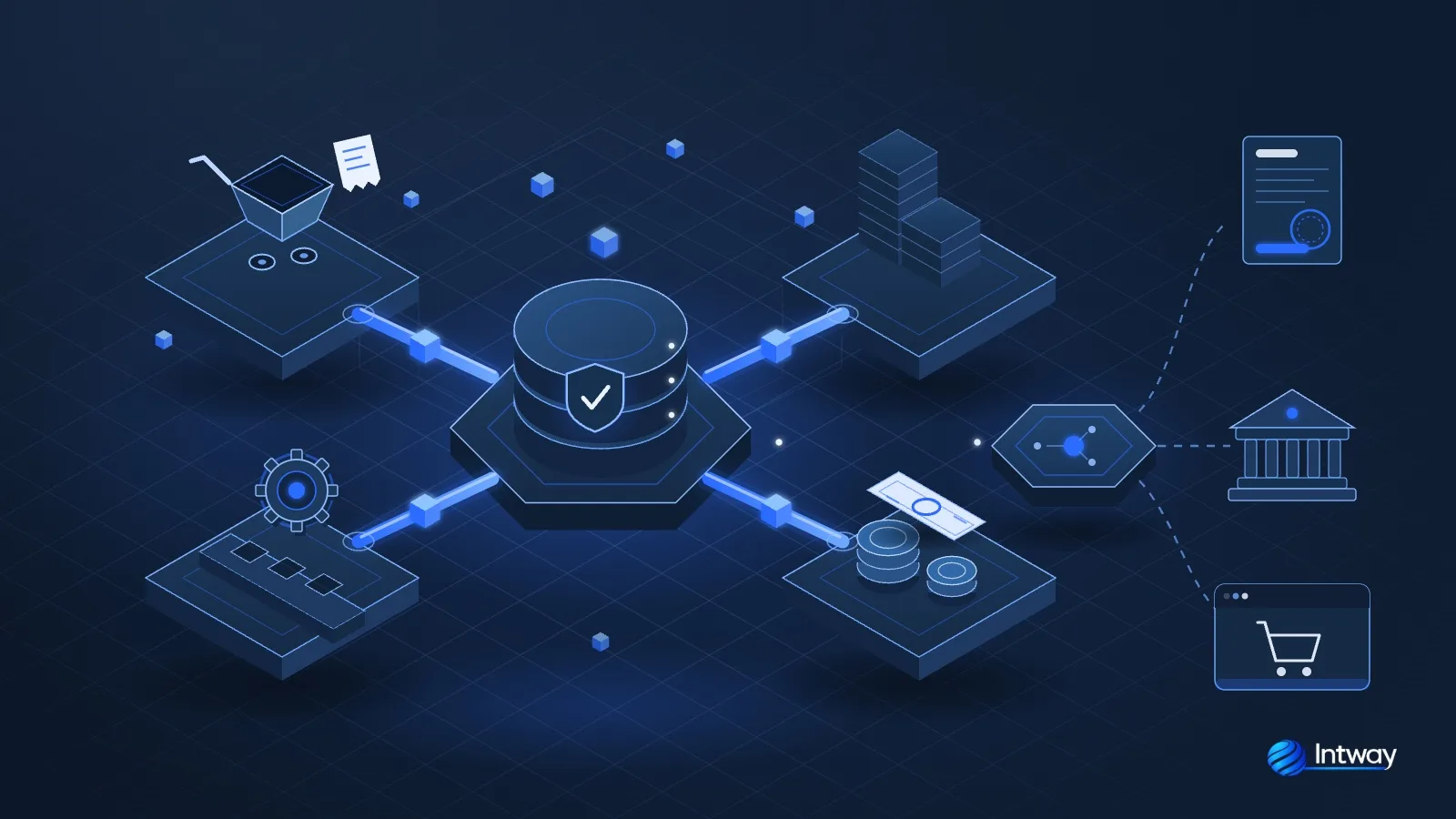
We use modular architecture from day one, even on small projects. Each module (sales, inventory, production, collections) is deployed and tested separately and talks to the rest through APIs. That lets you go live with one part of the system while everything else keeps running as it does today, without interrupting operations or asking anyone to learn everything at once. If you also sell online, that same modular approach is what drives our e-commerce and marketplace integrations.
The first module is not chosen by hierarchy but by pain: the process that burns the most hours or produces the most errors. If the first release does not give real time back to a specific person within weeks, the project started off wrong and it is worth revisiting before going further.
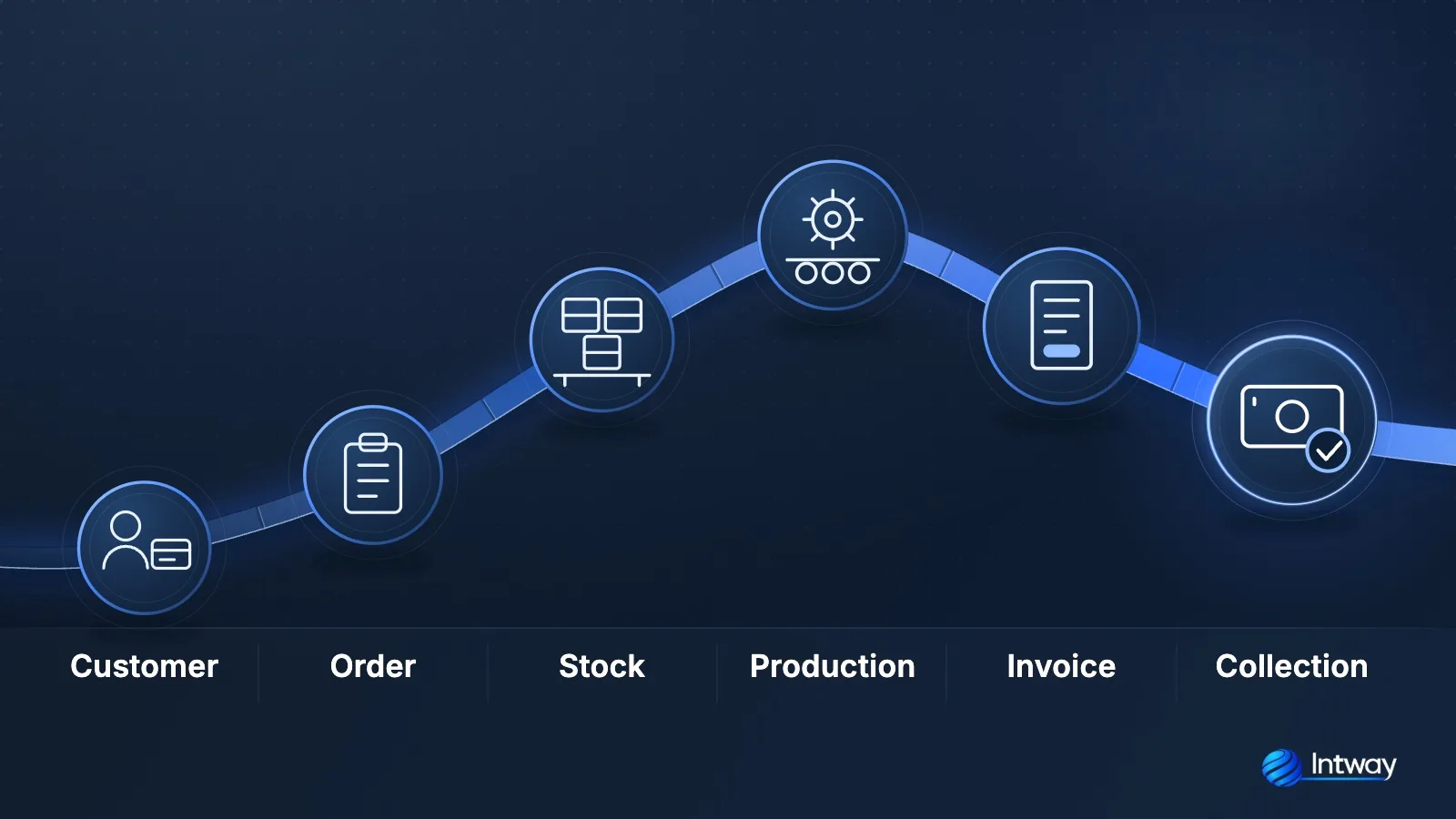
The study McKinsey ran with the BT Centre for Major Programme Management at the University of Oxford, covering more than 5,400 IT projects, found that large ones end up 45% over budget and deliver 56% less value than predicted. The practical conclusion for an SMB is not to panic: it is not to run large projects.
That is why every two weeks there is something working that you can see, click and use, and scope is locked per phase instead of in one twelve-month contract. You can pause, reprioritize or add a new module without renegotiating the whole project.
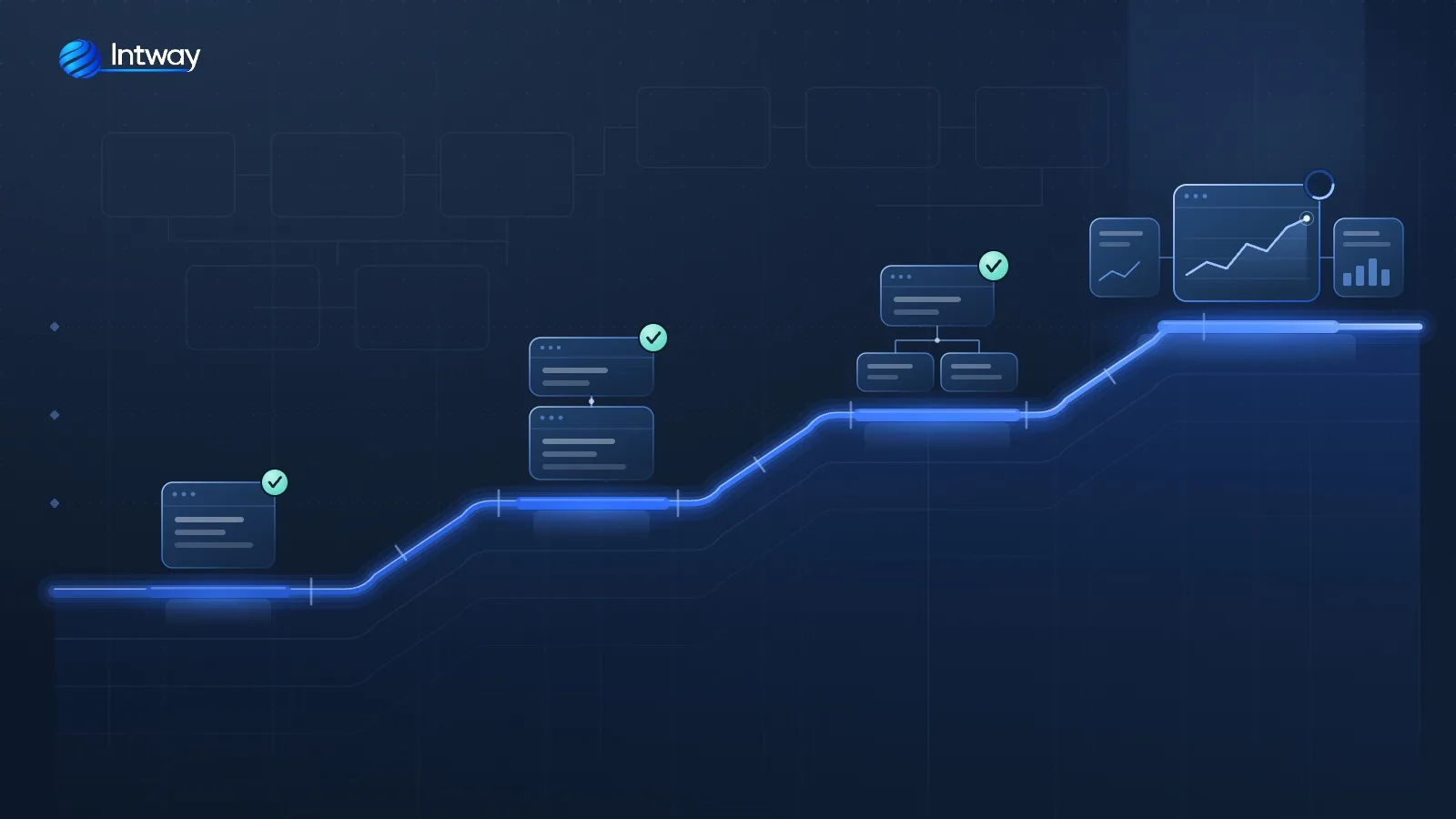
No names, because these are client operations.
| Company | Starting point | What we built | Result |
|---|---|---|---|
| Logistics operator | Seven parallel spreadsheets and four people entering orders by hand | Custom order system integrated with electronic invoicing and the Mercado Libre marketplace | 85% less administrative time |
| Manufacturing company | Outdated inventory and production planned outside the system | Online inventory and production orders integrated into the sales cycle | Real-time stock and production visible in the same system, with no manual counts |
The honest answer is that it depends, but it depends on concrete, measurable things:
We do not quote the whole system. We quote the first phase with locked scope and price, after a one or two week diagnosis, and that first module is usually in production within 4 to 6 weeks. Everything after that is quoted phase by phase, using what the previous one taught us: nobody has to sign today for what will only be understood six months from now.
The number that matters is not the price but how many monthly hours it gives back. When four people spend half a day entering data the system can capture on its own, or when building a quote takes twenty minutes and becomes a matter of seconds, the math closes in months rather than years. Tell us which process you want to solve and we will put a number on your case after the diagnosis.
Route sheets, digital delivery notes, shipment tracking and freight reconciliation. The order is entered once and travels all the way to invoicing with no retyping. We have a dedicated pillar on software for logistics and transportation with the full cycle.
Production orders, raw material control, batch traceability and real cost per product. The typical case is the plant that knows how much it sold but not how much it cost to produce until month-end close.
Price lists per channel, promotions, stock per location and customer accounts. This is where integration with the online store and marketplaces pays off fastest.
Appointments, medical records, insurers and service billing, with the data protection requirements the sector demands. We cover it in healthcare software.
Progress certifications, daily reports, subcontractor control and cost per site. Data is captured from a phone on location, with no signal, and syncs on the way back.
Seasons, plots, applications, storage and settlements. A sector where data is born in the field and the system has to go and get it there, not wait for it at the office.
Backend in .NET, Java or Node.js; frontend in React or Angular; databases in SQL Server, PostgreSQL, MySQL or Oracle; mobile in React Native. The choice is driven by your context, not our preference: if your internal team already knows a stack, that stack has the advantage.
Yes. We integrate through APIs, web services or scheduled file exchange depending on what each version exposes. What we settle up front is who owns each piece of data, so there are never two conflicting versions of the truth.
The system in production, the source code and infrastructure under your accounts, functional and technical documentation, and a team available to keep evolving it. If you want to build internal capacity, we do it through our software factory and team augmentation model. If what you have today is an old system that cannot be switched off overnight, the right path is progressive modernization, not a full rewrite. And once your data finally lives in one governed place, that is when it makes sense to talk about AI on your own data.
Across 25 years and more than 500 projects we learned something simple: SMBs do not need more software, they need less manual work. Everything else follows from that.

Software built around how your SME actually works — no licenses you don't use, no generic templates. We design and build exactly what your operation needs.
We map how your team works today and build the system around it, not the other way around.
Modular architecture: start with the essentials, add features as the business demands them.
No per-user fees, no unused modules. You pay for development, not endless licensing.
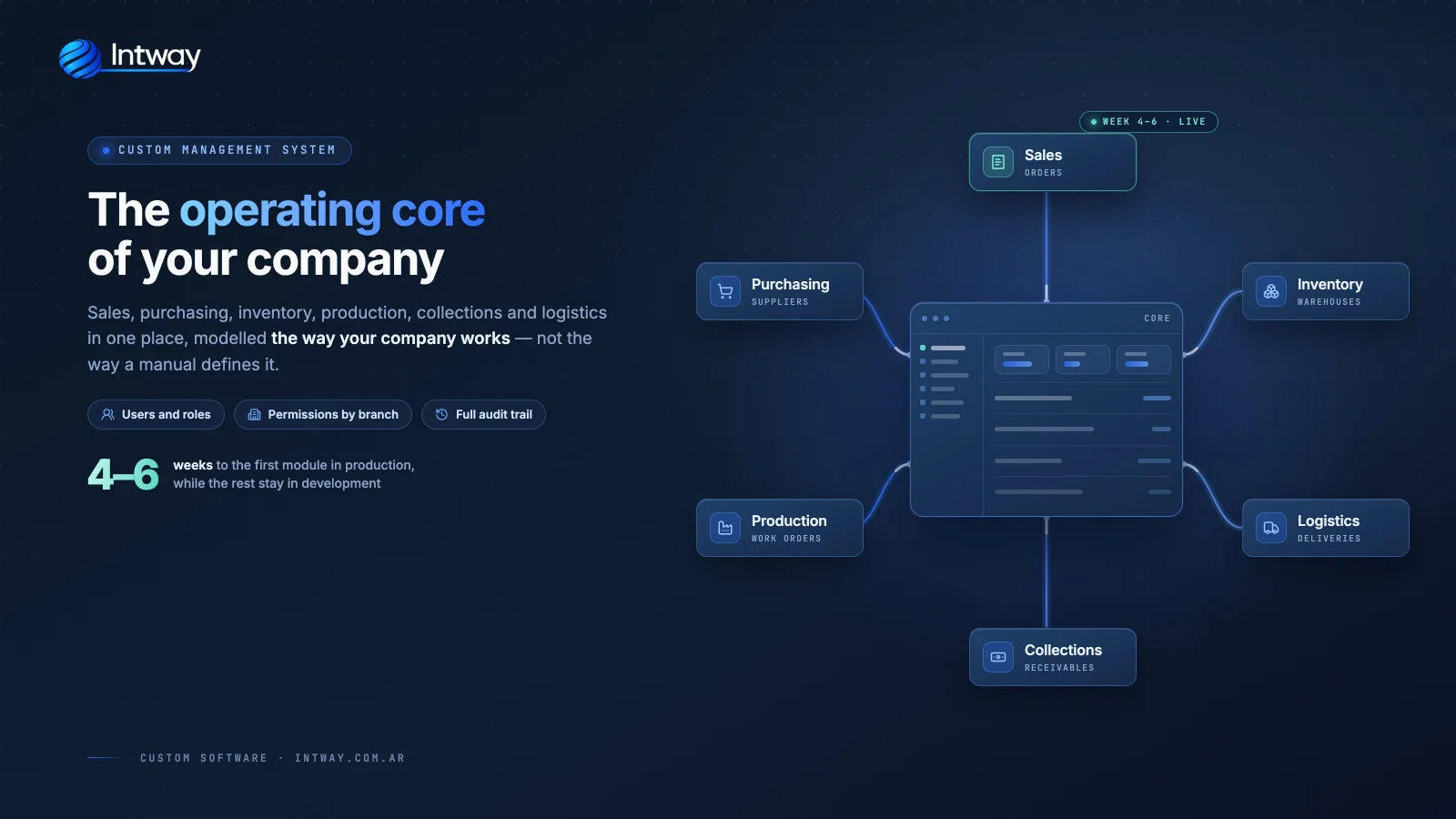
The operational core of the company, using your workflows and your wording.
Ver más →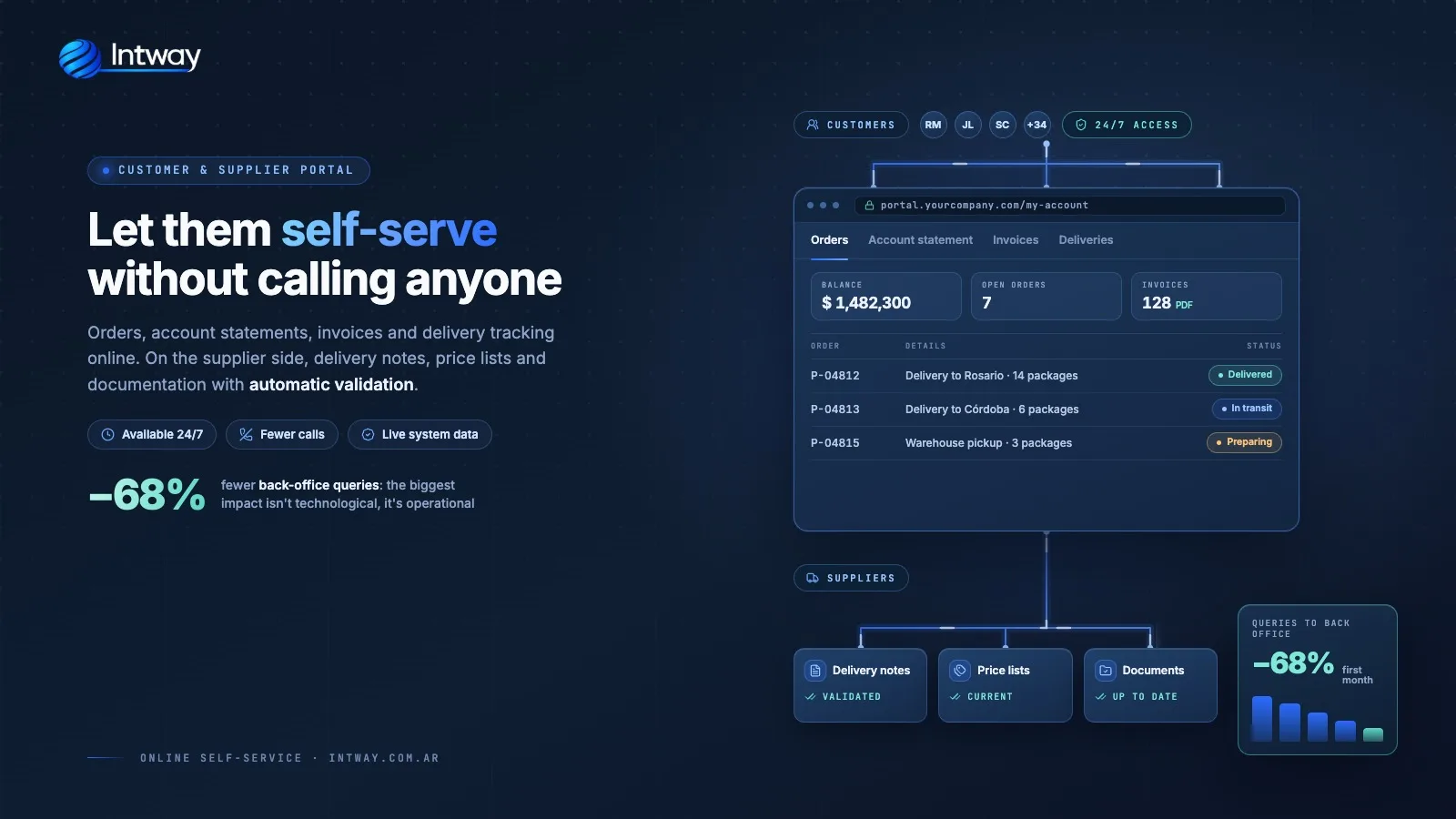
Self-service, so they stop asking for everything by email and phone.
Ver más →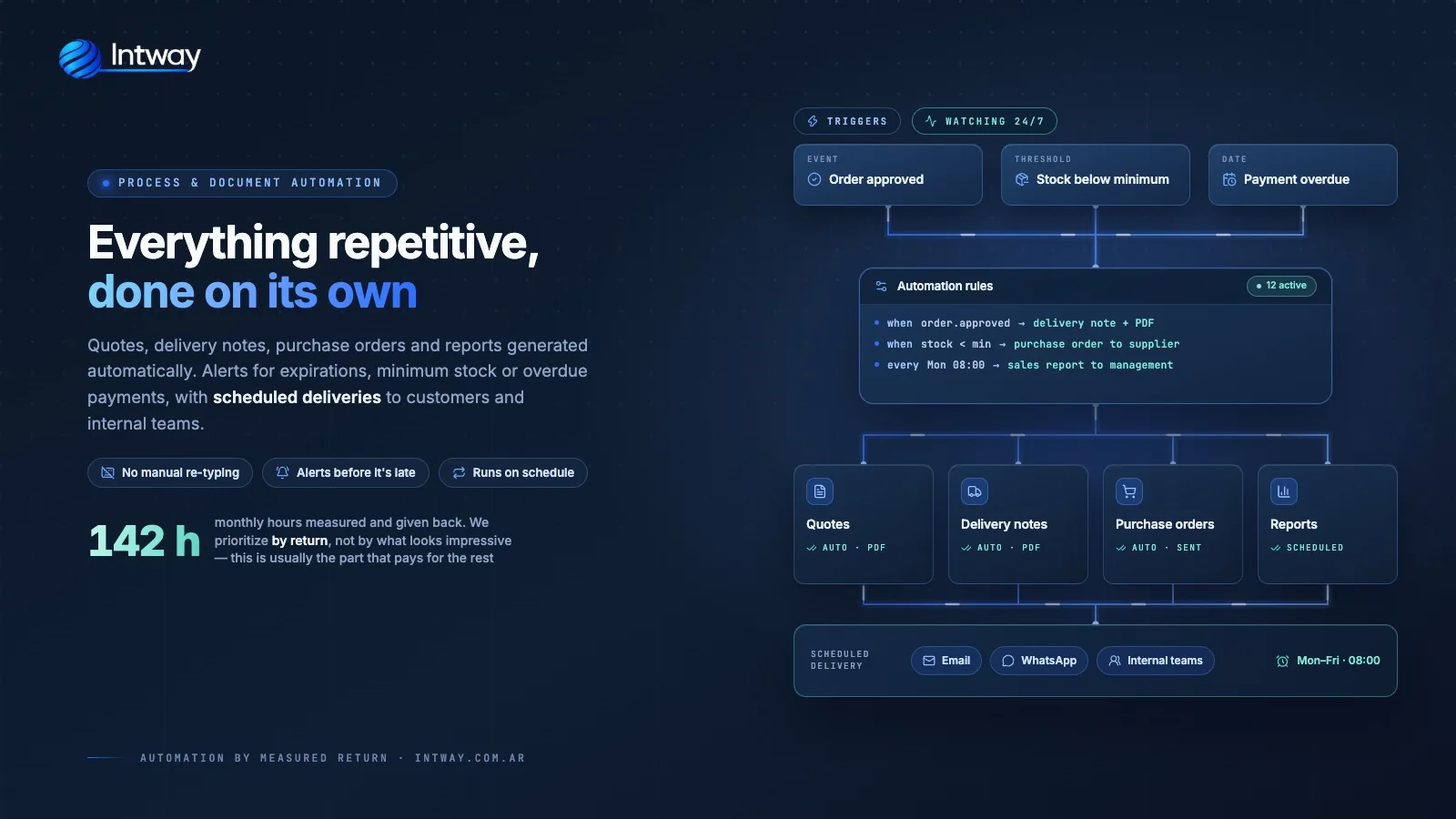
Everything repetitive that is done by hand today, done on its own.
Ver más →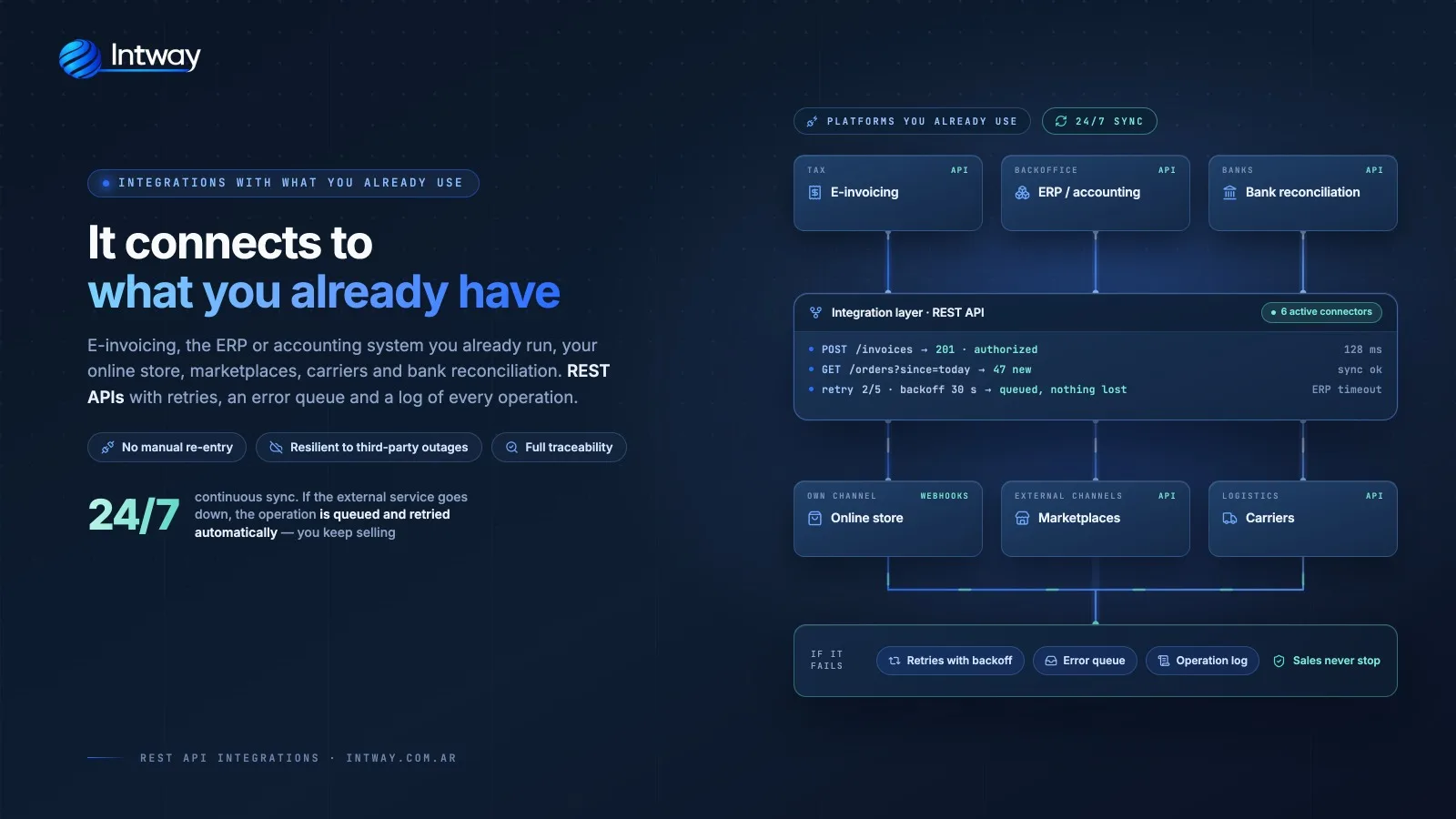
E-invoicing, ERP, banks, e-commerce and marketplaces.
Ver más →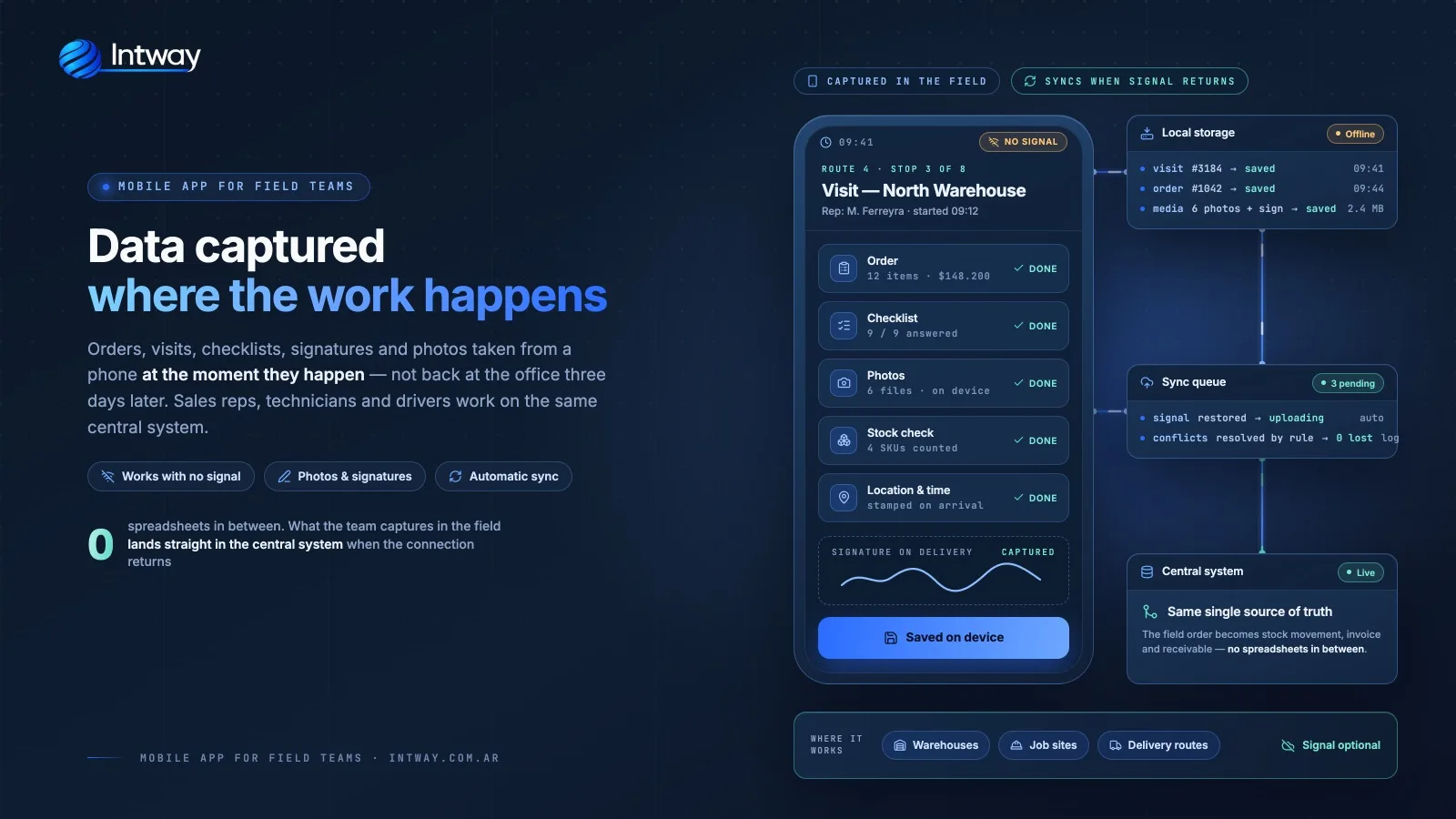
Sales reps, technicians and drivers capturing data on the spot.
Ver más →The four problems we hear most from businesses that outgrew their tools.
Critical data in files only one person understands, with published audits finding errors in more than 86% of operational spreadsheets. We move it into a system with users, permissions, history and backups.
Invoicing on one side, inventory on another, the online store somewhere else. We connect them through APIs so data is entered once and travels on its own.
A quote that takes twenty minutes today gets generated in seconds. Multiplied by daily volume, that is full working days returned to the team every month.
One or two weeks observing how you work today, which spreadsheets circulate and how many monthly hours each task consumes. We come out with a process map and a measured bottleneck.
We define what goes into the first release and what comes later. No open-ended contracts, no vague scope.
Every two weeks there is something working that you can use. We adjust with your team on the real system, not on documents.
Data migration, training and a supported rollout. After that, a continuous improvement plan at the pace the business needs.
It depends on scope, and five things define that scope: how many processes go into the first module, how many integrations are involved, how many user profiles exist, how many years of data must be migrated, and whether it runs in the cloud or on-premise. That is why we do not quote the whole system but the first phase, with locked scope and price, after a one or two week diagnosis. Get in touch and we will estimate it on your case.
The first production release is usually between 4 and 6 weeks from kickoff. It is not the full system: it is the module that solves the main bottleneck. From there, releases come every two weeks, and a complete management system for an SMB typically rolls out over 6 to 12 months with parts running from the start.
An ERP is a finished product that standardizes processes common to every company: accounting, purchasing, payroll, invoicing. Custom software is built around the processes specific to your business that no product ships with. The practical difference appears when something does not fit: in an ERP it becomes an expensive customization or a parallel spreadsheet, while in custom development it is just one more item in the next release. Most SMBs end up with both, connected through APIs.
Yes, and it is a formal project phase with its own allocated time. Data is cleaned, normalized, validated against the original spreadsheet and only then loaded. It is the most underestimated task in any project and also the one that preserves the most value, because that history is an asset you already own.
Yes. Source code, database, repositories, documentation and infrastructure access are in your company name from day one. If you stop working with us tomorrow, the system keeps running and any team can take it over, because we use standard market technologies.
A monthly agreement covering fixes, security updates and a pool of hours for improvements. It is not mandatory: since the system is in your name, you can maintain it with your own team or another provider whenever you want.
A 30-minute conversation is enough to know whether you need custom development, an existing product, or simply to integrate what you already have.
Book a meeting